Tamata Reo | Self-Initiated Project
Whau Arts Festival, Aotearoa NZ
Overview
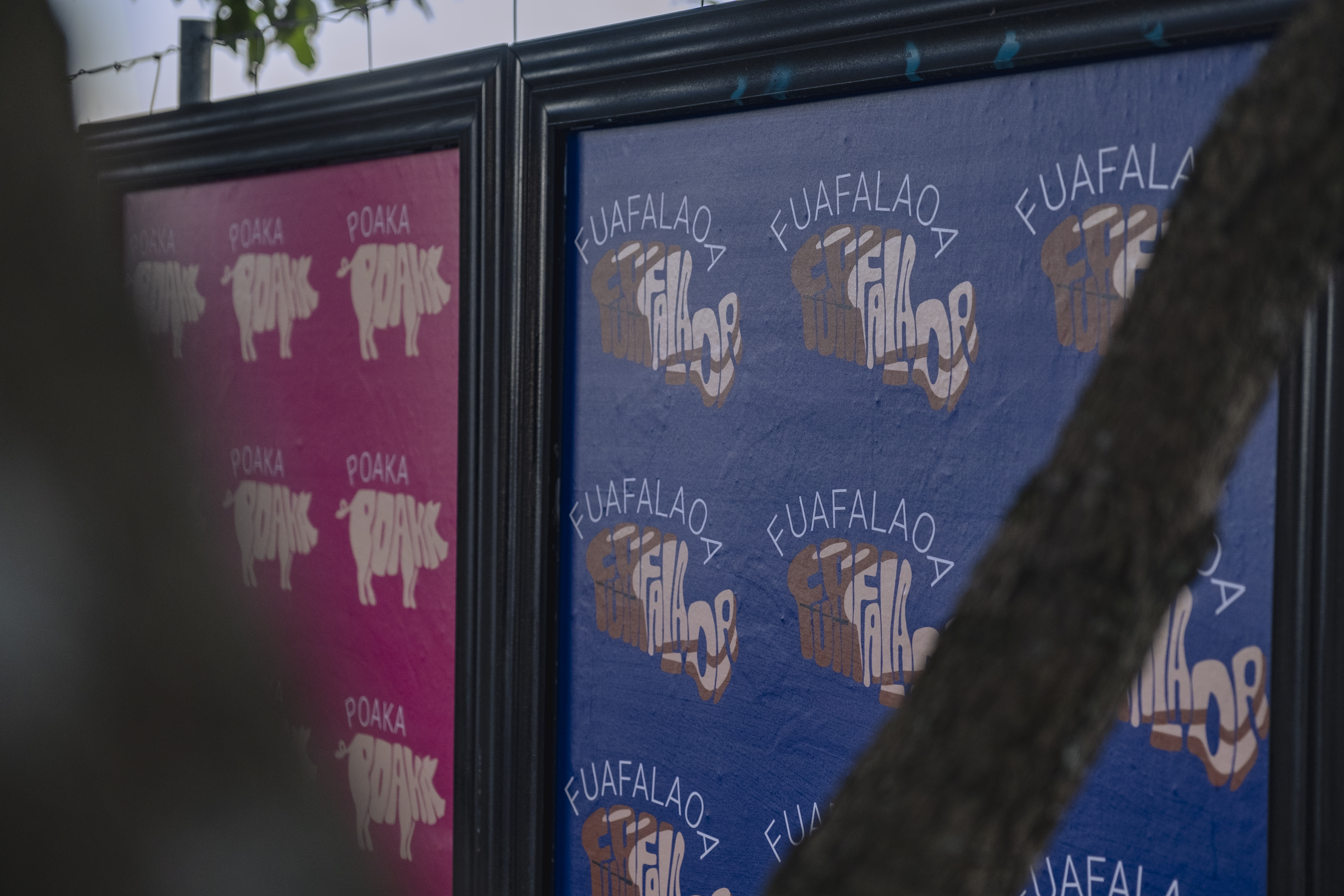
Tamata Reo is a self-initiated design project that develops a visual writing system to support and extend the learning of te reo Māori. The project is built around a series of glyphs — a constructed visual language where each form corresponds to a kupu (word), encoding meaning through shape, structure, and visual logic. Presented as large-scale posters within community spaces, the system operates at the intersection of language design, public education, and visual communication. Rather than translating words into imagery, the work positions glyphs as an alternative writing system that can be encountered and learned in everyday environments.
Functioning as both educational resource and public-facing communication, the posters embed te reo Māori into the visual fabric of shared spaces, encouraging ongoing, passive engagement with language outside of formal learning contexts.
Challenge
The project responds to the challenge of making language learning more accessible, visible, and culturally embedded within public space. Traditional learning resources often rely heavily on text-based or classroom-led approaches, which can limit broader engagement and everyday exposure. The aim was to design a system that could carry meaning without relying on direct linguistic explanation — instead using a structured visual language that could be read, learned, and recognised over time. At the same time, the system needed to remain culturally grounded, ensuring it supported rather than simplified or replaced te reo Māori. It also had to function at scale within public environments, communicating clearly and immediately while holding depth for repeated engagement.
Approach
I developed a glyph system informed by the structure of written language, where each form represents a kupu and functions within a broader visual system. The work operates along a pictographic-to-symbolic spectrum, moving between direct visual depiction and more abstract, constructed forms. Some glyphs communicate meaning through immediate pictorial association, while others rely on abstraction, metaphor, and cultural context to suggest meaning. This range allows the system to function both intuitively and structurally — readable at first glance, but also capable of deeper recognition over time.
Rather than separating illustration from language, the system integrates both modes of communication, allowing meaning to be carried through recognisable imagery as well as repeatable visual forms governed by consistent design logic. A restrained and cohesive visual language ensures clarity across the system, while simplified forms and strong compositional structure support legibility at large scale in public environments.
Applications
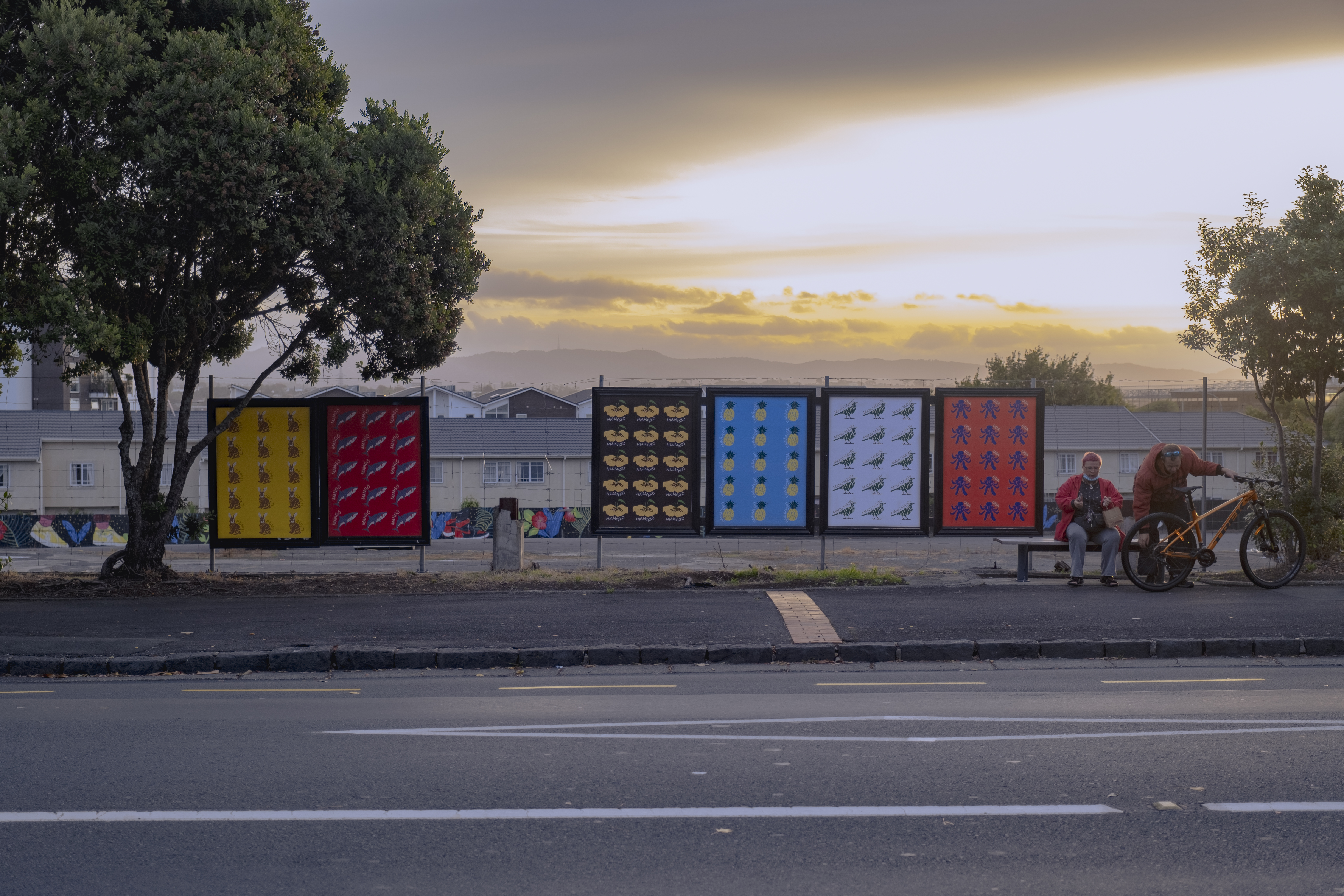
This application of Tamata Reo is a series of large-format posters installed in community environments. These act as both educational tools and public interventions, introducing the glyph system as a readable visual language within everyday contexts.
Outcome
Tamata Reo reframes language learning as a visual and spatial experience, embedding a constructed writing system for te reo Māori into public space. By shifting language into glyph-based form, the project supports recognition, curiosity, and gradual literacy through repeated exposure. The work was exhibited as part of the Whau Arts Festival at Great North Gallery (2022), and installed in high-foot-traffic public environments along a busy main road, allowing for sustained incidental engagement with daily pedestrian and vehicular movement.
UX Design
Illustration
Print
Typography